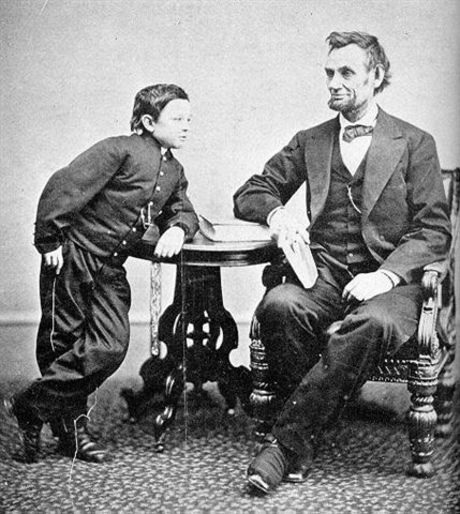
“The legitimate object of government is to do for the people what needs to be done, but which they can not, by individual effort, do at all, or do so well, for themselves.”
-Abraham Lincoln
Introduction
My views on the ideal government have changed rather dramatically over the past few years. I had never been one to pay close attention to politics until recently. I would probably be considered conservative by today’s definition. I would say I do not like labels, but the Wikipedia definition pretty much describes my beliefs to a T. While I have always been a fan of lower taxes (and really, who isn’t?), two other conservative principles, small, decentralized government and individual liberty, had not crossed my mind much before getting a job in the “real world.” However, since then, I have come to strongly believe in the importance of lower taxes, small, decentralized government, and individual liberty. These three principles are related, and in this three-part series I wish to delve into why these principles are so important to me, and why they should be important to you. This week, we will be exploring taxes.
History of Lower Taxes
If you want the main reason for why the United States exists as it does today, then look no further than taxes. By this, I am of course referring to the American Revolution. Our country was founded on a rejection of British authority, namely taxation and lawmaking without representation. Therefore, when someone expresses a belief in lower taxes, it is affirming the very basic principle upon which the United States was created. Our founders were fed up with the British government overreaching when it came to taxes and laws.
The Government Creates Nothing
There are many good reasons why most everyone is a fan of lower taxes. For starters, those who create wealth should be free to spend it as they wish. The government does not create goods or services, it merely re-distributes wealth, as succinctly stated by Ron Paul. The argument by Elizabeth Warren that we owe the government part of our wealth can be dismantled so easily. In fact, the government does not create public systems like roads on which to travel and police forces for protection. These are paid for with taxpayer funds. So by her argument, every taxpayer owes money to every other taxpayer. This notion of owed servitude is ridiculous. Imagine if you built a valuable piece of software using a Dell computer and then sold the software for millions of dollars. Would it be right for Dell to take a cut of your millions because you used a Dell product to help create your software? Of course not. I am not saying that the federal government has no role, but rather that it should be limited to what is laid out in the enumerated powers. In my opinion, the federal government should be responsible for a few actions related to foreign policy such as borrowing credit, coining money, regulating immigration, declaring war, and raising armies. Moreover, anything that the federal government does is going to be gummed up by a huge bureaucracy.
The Government is Horribly Inefficient
In plain English, the federal government is extremely inefficient. This is by design, and therefore the amount of money that a government collects through taxes should be only for programs which individuals cannot do as well through individual effort, as noted by Abraham Lincoln. There is reason why government was designed to move slowly. This is so that much consideration and deliberation is given to any action taken. Our government has tremendous power. Therefore, before exercising any power such as making a new law, it would be wise to ensure that what is being considered is the right thing to do. Moreover, high taxes discourage work and investment. When people are unable to keep and grow their money through savings, they are less willing to spend what they take home. With less work and investment, less jobs are created. Less jobs mean less people are working, and therefore the government would have to take a bigger cut from those who are working to continue funding programs. This bigger cut then gets washed through the federal bureaucracy, created inefficient programs. It is easy to see that a vicious circle is created. On the other hand, lower taxes mean more prosperity for more people. People who have more to spend are willing to take greater financial risks and spend on goods and services that create wealth for other people.
Low Taxes are the Only Practical Check Against Expanding Federal Government
As I mentioned above, the federal government is extremely inefficient. Moreover, the government tends to spend (and overspend) all of the money collected through taxation. More programs require more taxes. More taxes mean an ever expanding federal government. When is the last time a government program came in under budget? It does not happen, because if it did, then government employees would be out of a job as this would mean they are not actually needed. Since the federal government will spend every dollar, and therefore waste a huge portion of every dollar, the only way to reduce the amount of waste is through lowering taxes. This must be demanded by the people. By its nature, the government will never correct itself and eliminate inefficiencies. Bad programs must be cut and eliminated.
Conclusion
There are very few things that American citizens can universally agree on. However, lower taxes may be one of them. Because the government creates no wealth, spends every penny it collects via taxes, and is horribly inefficient, it must be limited through lower taxes. Putting money back into the pockets of hard working Americans is the one true way to limit the size and scope of government. Speaking of which, part two of this series on my ideal government will focus on the importance of small, decentralized government. Stay tuned.
 Liberty Matters
2 thoughts on “Three Principles of my Ideal Government – Part One – Lower Taxes”