
Introduction
Since Donald Trump was elected to be the next president of the United States last month, I have seen countless articles attempting to explain why the Electoral College is a bad idea and that it needs to be eliminated. Most of these articles, like this one from Vox, echo similar opinions: only a few swing states determine the outcome, the system is undemocratic, and certain individual votes in states with smaller populations hold more weight. These arguments are all voiced in a way which completely misses the entire purpose of the Electoral College. In this post I will argue why the Electoral College is necessary for a fair democratic republic while refuting the common arguments against its existence.
The Principal Reason Why the Electoral College Exists
The foundational reason why the United States elects a president with the Electoral College system is as follows: it is a necessary check against direct democracy and potential tyrannical rule of the majority. Wait, did I just suggest that the Electoral College makes the United States less democratic? Yes, I did, and for good reason.
The truth is, most of the founding fathers were quite fearful of direct democracy. James Madison was opposed to it because he feared that a faction, a group of individuals with common interests, could potentially grow into a majority of the population. This would be very harmful to the public good and individual rights of citizens as shown in the opinions from Madison’s Federalist #10, an essay written to the citizens of New York. In this essay, Madison argues that when a majority is included in a faction, the faction is then enabled “to sacrifice to its ruling passion or interest both the public good and the rights of other citizens.” This type of ruling passion is often referred to as “mob rule.”
The Electoral College is a check against this potential tyrannical rule of factions. It ensures that the President-elect represents many minorities as opposed to a few majorities. The idea behind empowering minority groups ensures that diverse opinions are represented in the election. This way, a president cannot simply appeal to a single faction.
The Swing State Argument
One of the main arguments against the Electoral College is that the president is only chosen by a few swing states. The main point raised by the Vox article and others is that votes in non-swing states don’t matter. Of course, the article misses one important fact: swing states change.
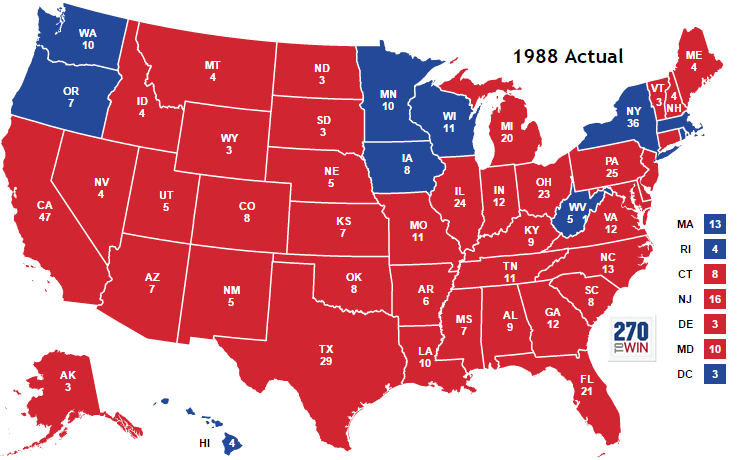
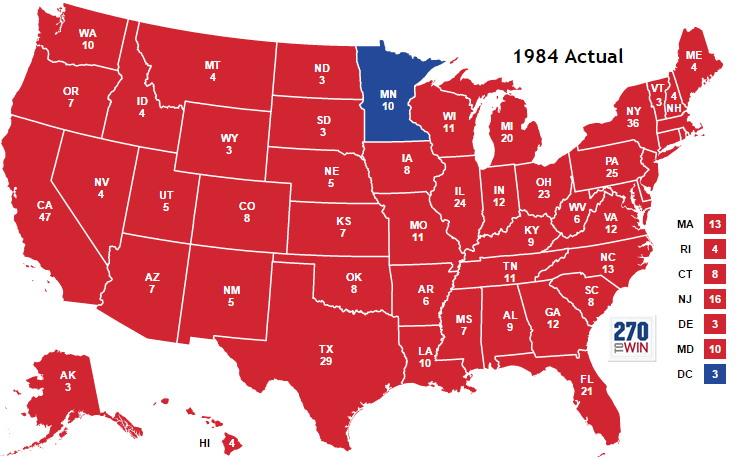
Donald Trump won Michigan, a state that hasn’t been red since 1988. Coincidentally, that year was the most recent that California went red. Yes, the state considered to be the bluest of blue was not 28 years ago. How about New York? It last went red in 1984. What about the red state of Texas? It was last blue in 1976. So, this idea that the same few states always swing the election is patently false. Indeed there are some states that switch between red and blue more often than others. However, this changes every one or two generations. In fact, only a very few number of states have been one color since 1976.
The Electoral College is Undemocratic
Another argument against the Electoral College is that it is undemocratic. Votes carry different weights depending on the state in which they are cast. Yes, this is true. And it is by design. Some some states with small populations do have a higher proportion of electoral votes, thereby giving more weight to individual votes in these states.
However, I don’t understand the argument behind being against this empowering of minorities. Vox argues that the only fair democracy is one by which the popular vote decides the president. Vox wants sparsely populated communities and minorities to have the same weighted vote as large cities. If this were the case, the president would really be chosen by a few large cities. The argument for a “fair” election of popular vote only ensures that small minorities of concentrated populations determine the election. So on one hand, Vox thinks it is unfair when only a few swing states determine the election, yet they are in favor of a system that would give this power to a few cities. Something about this doesn’t quite add up.
Conclusion
Vox and similar parties like to bitch about how unfair this past election was. They try to piece together an argument in favor of direct democracy. They cry foul because a few swing states determine elections while arguing for a system that would give this swing power to a few largely populated cities. The founders predicted that if a majority came to power in a pure democracy, they would simply vote in accordance with laws that gave themselves handouts and more power. So, you can see that it is essential to have a system of checks and balances that does not allow this to happen. From the perspective of founders like James Madison, the best way to keep majorities from arising is to empower a multiplicity of diverse minorities. The Electoral College is designed to do just this.
For more on this topic, I suggest you watch this online course from Hillsdale College.
 Liberty Matters